About
Bellek means “memory” in Turkish. We settle the Turkish terms your content needs from what each concept means, not from how its word sounds, and record the reasoning behind every choice. The translation then follows those decisions.
How it started
In an internal NeXT talk in 1991, Steve Jobs said, “As Regis McKenna once said, the best marketing is education. And as we accomplish that education, more and more customers are going to be asking us about interpersonal computing, versus us having to educate them.”
Once I asked myself, what really is education? It's a multi-stage process of training the mind and body to acquire a target set of skills. Then, the question is: how do we train the mind?
We use words and terms to train our minds. Conceptualization of the terms with their proper connotations lays out the groundwork to learn a new skill. Acknowledging this has led me to think much deeper into the words and terms that I've come across.
The problem
Native words get traction. Foreign words do not resonate.
Why do most Turkish Excel users have trouble with the most basic formulas? Why does it take so much longer for a Turkish architect to learn Revit? Why do Turkish developers have a much steeper learning curve when they are first learning programming languages?
All three questions have a single answer: It's the lack of proper terminology and a language that will transfer the know-how. Software, or any knowledge work, may sound like gibberish unless it is properly geared towards the language framework of the target user group.
The solution
Language evolves in distributed networks entropically. Though this is usually what makes it so powerful and adaptive, a common ground is often necessary to work collectively. If a term in Revit means something to a group of people, but a different thing to the other group, disagreements arise on day 1.
We, at Bellek, work to lay that abstract common ground so that a term has (pretty much) the same meaning across all minds. We consider language as a web of resonations, not in separate vacuums of specific fields.
Today and tomorrow
So many new words and terms enter our language every day. As our lives change faster, our language cannot lag behind.
Turkish and its sister languages have a very strong backend to properly generate the new words and terms, as we experience change. However, a thorough understanding of our language structures is critical for how well we can adapt to the change.
Who is behind Bellek
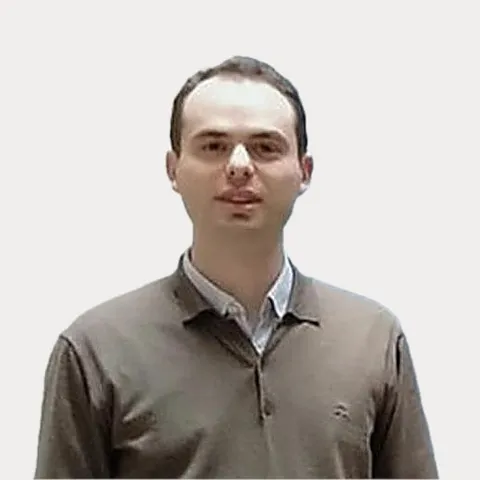
Rifat Tigli.
Growth lead. Engineer. Turkish and language researcher.
Tell us what you’re bringing into Turkish
Which content, which languages, what timeline? A few lines are enough. We’ll tell you plainly what we can do.
Get in touch